
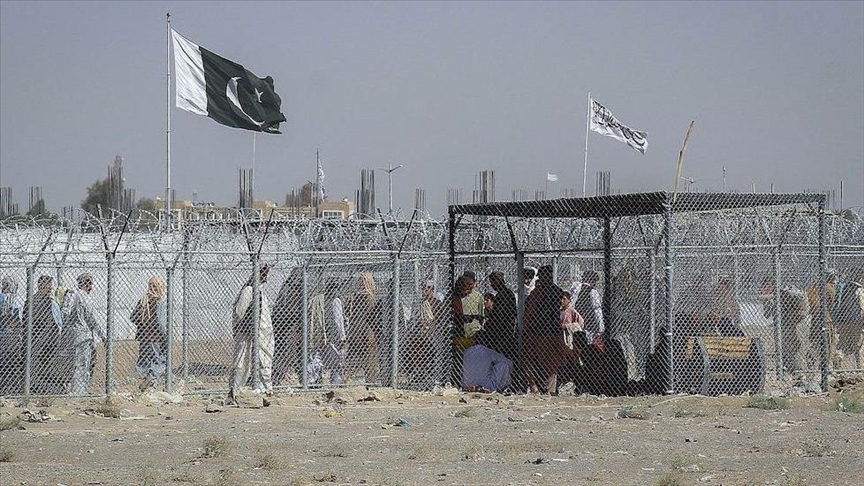
Amidst the ongoing regional conflicts, political tension and cross-border clashes have escalated between Afghanistan and Pakistan that will compound the already fragile security landscape within both the countries, raising concerns of a wider regional destabilization. The relation between the two countries has been deteriorated as Islamabad accuses Kabul of harboring Tehreek-e-Taliban Pakistan (TTP), the allegations denied by the Taliban, saying it will not allow Afghan territory to be used against any countries.
Pakistan and the Taliban practiced friendly ties for long as the group’s leadership council, known as the “Quetta Shura”, was widely believed to have operated from the Pakistani city of Quetta during the Afghanistan’s republic administration. Shortly after the Kabul’s takeover, the then ISI chief Lt. Gen. Faiz Hameed made a high-profile visit to Kabul, drawing significant regional and global attention. Moreover, Pakistan was among the few countries that continued its diplomatic tie with the Taliban through keeping its embassy open. But their relations grew tense since last year.
The military clashes between the two sides have escalated since late February leading to civilian fatalities in Afghanistan. According to the UNAMA’s latest report, 24 civilians were killed, 104 others, including women and children, were wounded, and 16,400 households were displaced in Afghanistan’s provinces of Paktya, Paktika, Nangarhar, Kunar, and Khost between February 26 to March 2 as a result of cross-border clashes and Pakistan’s air strikes.
It should be noted that Pakistan has serious challenges far beyond the TTP. That is, Islamabad has been capitalizing on religious elements for political purposes for many decades. To look back at history, Pakistani government trained and armed Afghan mujahideen in 1980s to fight against the former Soviet Union. Perhaps since the Pakistan’s establishment, so many madrassahs (religious seminaries) have been operating up to now with their own ideological syllabus. The madrassahs disseminate radicalism and implant fundamental ideology in the students’ minds. Those hardliners establish parties and enter politics. For instance, in addition to the TTP, there are several hardline groups in Pakistan such as Lashkar-e-Jhangvi, Jaish-e-Mohammad, Sipah-e-Sahaba Pakistan, Tehreek-e-Labbaik Pakistan, and the Islamic State affiliate, to name but a few. Although Pakistan proscribed these groups, including Baloch Liberation Army (BLA), as terrorists and banned their activities, they are still engaged in Pakistan’s destabilization. For example, a suicide bomber attacked a Shiite Mosque in Islamabad on February 6 which killed 31 people – the Islamic State affiliate reportedly claimed the responsibility.
Meanwhile, Pakistan’s attitude suggests a strong sensitivity toward a friendly relation between Afghanistan and India. In 2017, when I was attending an international conference in Beijing, I had a friendly talk with a high-profile Pakistani journalist about politics. He said, “Afghanistan will never be stable as far as India is operating there.” I did not understand his intention well, but I truly realized Islamabad’s opposition towards the Kabul-Delhi diplomatic ties. That is, Pakistan carried out air strike on Afghanistan’s Paktika province on October 9 last year, the exact same day Taliban’s Foreign Minister Amir Khan Muttaqi visited India along with his high-level delegation. The trip was made to start a diplomatic tie – as India announced reopening of its embassy in Kabul after its closure on 17 August 2021 – and commercial relations with New Delhi; nonetheless, Pakistan’s strike on the same day signaled its disapproval.
The attacks on Afghanistan’s soil and killing civilians will simply generate public hatred against Pakistan rather than contributing to its stability. If Pakistan is sure of the TTP’s activities against it from Afghanistan, which is repeatedly denied by the Taliban, it has to tighten the border security and start a crackdown on any militant groups on its own soil. Similarly, Pakistan has to dismantle radical groups, ensure full control on madrassahs and their syllabus, and stop using religious elements for political purposes.
I would like to emphasize that a hostile relation and halting commercial ties will be self-destructive for both the countries. A stable Afghanistan and Pakistan are in need of bilateral cooperation which will be achieved through meaningful talks. Regional stakeholders, including China, Russia, and Turkiye are able to bring the two sides to the negotiating table and have to play their role in this regard.
It is self-explanatory that one cannot compare the military capabilities of an atomic power such as Pakistan with Afghanistan, but there is no justification for a powerful state to violate the sovereignty of a weak country. Pakistan has to treat Afghanistan as an independent and sovereign country, with full authority to establish relations with any states. That is, diplomatic and commercial ties with India does not necessarily mean practicing a hostile relation with Pakistan or vice versa. The Taliban has shown no interest in engaging in Pak-India’s political rivalry, but it is simply seeking to continue its friendly relations with both the countries to support a win-win situation. So, Pakistan has to respect Afghanistan’s sovereignty and resolve any tensions through negotiations.
A secure and strong Afghanistan is in the interests of Pakistan. The two countries have to develop their diplomatic and commercial relations, cooperate each other in eliminating militant groups, mainly the Islamic State which is a common enemy for both, and resolve their problem through peaceful means. The world, including the international community, has to stop turning a blind eye to the ongoing clashes between the two countries and use its leverage to end the problem so as to prevent a wider regional destabilization.