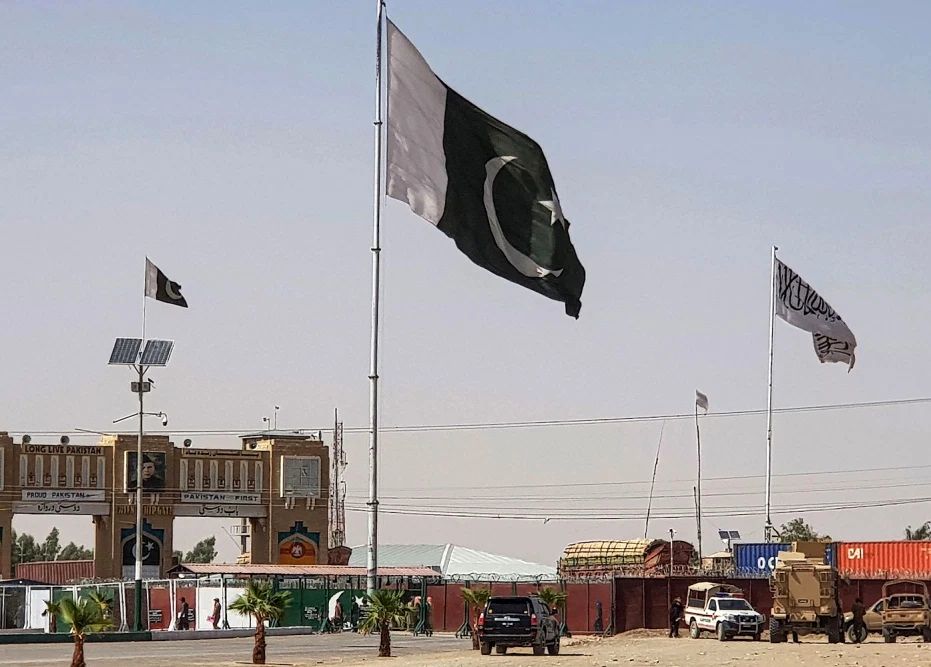
Three young members of the Afghanistan Cricket Board were among eight civilians killed in an airstrike conducted by Pakistan in eastern Paktika province last year. Their deaths, which sent shockwaves through Afghan communities, suggested that the conflict between Pakistan and the Taliban would not be restricted to military targets. The incident reinforced fears that civilians could increasingly bear the brunt of cross-border tensions and military escalation.
The escalated tension between Taliban-ruled Afghanistan and Islamabad has now entered its third week. Pakistan has repeatedly carried out airstrikes and artillery attacks against what it describes as militant hideouts inside Afghanistan. However, the Taliban has condemned the attacks, saying Pakistan has targeted civilians and residential areas. UNAMA confirmed the deaths of 42 civilians and injuries to 104 others in Pakistan’s attacks between February 26 and March 2. It also added that 16,400 households were internally displaced, highlighting the growing humanitarian consequences of the conflict.
For the last few weeks, I have been hearing the sounds of jets and explosions in Kabul. As usual, I heard a jet roar in Kabul’s sky on Monday night, followed by two heavy explosions and then a series of gunshots. Reports said that Pakistan conducted an airstrike on an addiction treatment hospital in which, according to the Taliban’s deputy spokesman Hamdullah Fitrat, 400 people were killed and 250 others were wounded. Confirming the attack on the hospital, Zabihullah Mujahid, the Taliban’s spokesperson, condemned the strike in a statement on X, saying, “We strongly condemn this crime and consider such an act to be against all accepted principles and a crime against humanity.” These claims, whether independently verified or not, intensified public anger and deepened mistrust between the two sides.
For Afghan civilians, especially those who live in regions surrounding the Afghan-Pakistan border, such incidents are not simply political disagreements but serious threats to daily life. Beyond men, Afghan women and children, who have no role in political instability, find themselves particularly vulnerable to military actions. Meanwhile, the psychological impacts of the conflict weigh heavily on Afghan non-combatants, many of whom have already endured decades of violence, displacement, and uncertainty. Fear, anxiety, and insecurity once again dominate communities that had only recently begun hoping for relative calm.
Since non-combatants have no role in political violence, targeting them is a flagrant violation of humanitarian law. Civilian casualties are also likely to intensify anti-Pakistan sentiment among the Afghan population and create an environment in which some individuals may become more willing to join militant ranks. Such a scenario would be counterproductive and could contribute to further destabilization in Pakistan itself. With this in mind, Islamabad needs to exercise caution, avoid actions that fuel public resentment, and refrain from targeting civilian infrastructure and residential areas.
To be clearer, targeting civilians may unintentionally justify insurgency within Pakistani territory by reigniting narratives of resistance against an external aggressor. Considering the high unemployment rate and the existence of numerous religious seminaries throughout Afghanistan, with perhaps tens of thousands of students, there is a strong potential for frustrated youth to mobilize. Those who lose family members may feel a heightened desire to retaliate. It should also be noted that the United States failed to stabilize Afghanistan through prolonged military action. Therefore, Islamabad should avoid repeating strategies that historically produced more instability rather than long-term security.
Let me raise a simple question: what would be Pakistan’s reaction if India attacked Lashkar-e-Taiba or Jaish-e-Mohammad on Pakistani soil? And what if such an attack resulted in the deaths of dozens of civilians? It is self-explanatory that Pakistan would deny harboring such militant groups, describe the attack as a violation of sovereignty and territorial integrity, and likely respond militarily. Similarly, Pakistani religious groups and Islamist parties would condemn such an action and demand stronger retaliation. Pakistani authorities would not be convinced by India’s narratives of self-defense against cross-border terrorism, non-state actors, or preventive strikes.
This question was effectively answered in 2019 when India targeted what it described as a training camp of the Jaish-e-Mohammad group in Balakot, in Pakistan’s Khyber Pakhtunkhwa province, in retaliation for the death of 40 Indian troops in Kashmir in a suicide bombing on February 14 of the same year. Pakistani authorities, angered by the incident, responded with military action and strong rhetoric against India, even though no civilian casualties were reported. Considering this precedent, Pakistan should recognize that cross-border military action risks escalation and that violating Afghanistan’s territorial integrity is unlikely to produce sustainable security outcomes.
Social media reactions indicate that the civilian casualties on Monday night have outraged many people across Afghanistan. Harsh rhetoric against Pakistan has emerged from former high-ranking officials, including former head of Afghanistan’s National Directorate of Security Rahmatullah Nabil, as well as from ordinary citizens. Regardless of whether individuals support the Taliban or oppose them, many Afghans express anger at the deaths of compatriots and what they view as aggression against their homeland. This shared sentiment cuts across political divisions and reflects broader national frustration.
It is also disappointing to see limited condemnation from global actors or regional stakeholders. The United States, China, Russia, and several Gulf countries appear largely silent. Meanwhile, the United Nations risks losing credibility if powerful states violate international norms with impunity. Amid ongoing conflicts and civilian casualties, statements of concern from international bodies often carry little practical impact. If the international community continues to remain indifferent to humanitarian crises, violations of sovereignty, and escalation between fragile states, the long-term consequences could be severe and far-reaching.
Overall, Pakistan appears to have adopted a counterproductive strategy. Military force—especially when it leads to civilian casualties—may ultimately backfire. Such actions risk increasing instability on both sides of the border and compounding broader regional tensions. Diplomatic engagement, confidence-building measures, and sustained negotiations are more likely to reduce tensions. Regional and global actors also need to play a constructive role in encouraging dialogue and preventing further escalation between Afghanistan and Pakistan.
Pakistan’s Military Action Unfolds Human Crises, Outrages Afghans